Understanding Food Labels – Beginner’s Complete Guide
understanding food labels guide
Introduction:
If you’ve ever stood in a supermarket aisle staring at a product label and felt confused, you’re not alone. The understanding food labels guide helps you decode the hidden meanings behind the numbers and words on packaging. Food labels are powerful tools that tell you what’s really in your food — calories, nutrients, sugar, fats, and more. Once you understand them, you can make smarter and healthier eating choices.
In this guide, we’ll walk you step by step through how to read food labels, what to look for, and how to use that knowledge to improve your diet.
Why Food Labels Matter
The understanding food labels guide begins with one simple fact: knowledge is power. Food manufacturers are required by law to provide nutrition facts so you can see exactly what you’re eating.
When you understand labels, you can:
- Avoid hidden sugars and unhealthy fats
- Choose products rich in nutrients
- Compare foods easily
- Control portion sizes
- Support specific health goals (like weight loss or diabetes control)
Learning to read labels isn’t just for nutritionists — it’s for everyone who wants better health.
The Basics of a Nutrition Facts Label
A typical food label includes key sections that are part of the understanding food labels guide:
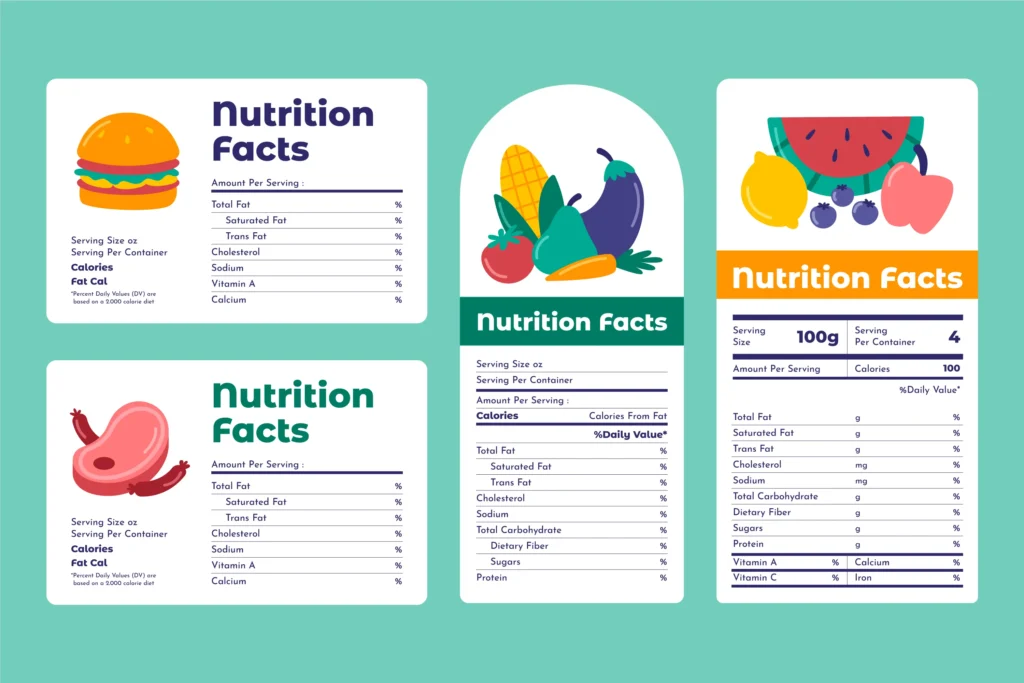
- Serving Size and Servings Per Container
- The serving size tells you how much of the product equals one portion.
- Always check if the package contains more than one serving — you might be eating double or triple the calories without realizing it.
- Calories
- This shows the energy you get per serving.
- If a package lists 200 calories per serving and you eat two servings, you’ve had 400 calories.
- Macronutrients: Fat, Carbohydrates, and Protein
- Fat: Includes total fat, saturated fat, and trans fat. Limit saturated and avoid trans fats.
- Carbohydrates: Includes total carbs, sugars, and fiber. Choose foods with higher fiber and lower added sugar.
- Protein: Essential for muscle and tissue repair — aim for moderate amounts.
- Micronutrients: Vitamins and Minerals
- Labels often list Vitamin D, Calcium, Iron, and Potassium.
- The understanding food labels guide recommends choosing foods that provide at least 10–20% of daily value for key nutrients.
What “% Daily Value” Really Means
The “% Daily Value” or “%DV” tells you how much of a nutrient one serving contributes to your daily diet (based on 2,000 calories).
In the understanding food labels guide, here’s how to interpret %DV:
- 5% or less: Low in that nutrient
- 20% or more: High in that nutrient
Example:
- 5% calcium = low calcium food
- 25% fiber = excellent fiber source
Always aim for high %DV in nutrients like fiber, vitamins, and minerals — and low %DV in sodium, sugar, and saturated fat.
How to Spot Hidden Sugars
Sugar is one of the most misleading parts of any food label. Companies often use fancy names to disguise it.
The understanding food labels guide lists these common hidden sugars:
- Sucrose
- Fructose
- Glucose
- Corn syrup
- Maltose
- Dextrose
- Cane juice
- Honey or molasses
If you see several forms of sugar listed, that’s a red flag — the food likely contains high added sugars, even if it claims to be “healthy.”
Understanding Ingredient Lists
Every ingredient in a food product is listed from most to least by weight. That means the first ingredient is the largest portion of what you’re eating.
The understanding food labels guide suggests looking for:
- Whole foods listed first (e.g., whole wheat, oats, fruit).
- Avoid products that start with sugar, white flour, or hydrogenated oils.
- Shorter ingredient lists usually mean less processing.
Example:
If the first three ingredients are sugar, flour, palm oil, it’s likely an unhealthy choice.
How to Read Fat Content
Fats aren’t all bad — they’re essential for brain and heart health. The key is knowing which types to limit.
The understanding food labels guide explains:
- Saturated fat: Found in animal products and processed foods. Limit it.
- Trans fat: Avoid completely — even 0.5 g per serving can be harmful.
- Unsaturated fat: Found in olive oil, nuts, and fish — these are heart-healthy.
Always choose foods with low saturated fat and no trans fat.
Sodium and Blood Pressure
High sodium intake can lead to hypertension and other heart problems. The understanding food labels guide recommends keeping daily sodium below 2,300 mg.
When reading labels:
- Choose foods with less than 140 mg per serving (low sodium).
- Avoid processed foods like chips, soups, and frozen meals that often exceed limits.
Fiber and Carbohydrates
Carbohydrates are not your enemy, but understanding them is crucial. The understanding food labels guide helps you pick the right carbs:
- Choose foods with at least 3–5 grams of fiber per serving.
- Avoid “refined” or “white” carbs with high sugar and low fiber.
- Whole grains, beans, and vegetables are the best carbohydrate sources.
Fiber helps digestion, controls blood sugar, and keeps you full longer.
Protein: The Building Block
Protein helps maintain muscle, repair tissues, and support immune health. The understanding food labels guide suggests choosing lean protein sources such as:
- Eggs
- Chicken
- Fish
- Lentils
- Tofu
- Greek yogurt
When reading a label, aim for foods with at least 5–10 grams of protein per serving.
Decoding Health Claims on Packages
You’ve probably seen terms like “low-fat,” “organic,” or “sugar-free” on products. But what do they actually mean?
The understanding food labels guide helps you identify marketing tricks:
- Low-fat: Less than 3 g of fat per serving — but may have more sugar.
- Sugar-free: Less than 0.5 g sugar, but may include artificial sweeteners.
- Natural: Not regulated; doesn’t always mean healthy.
- Organic: Grown without synthetic pesticides, but calories and sugars can still be high.
Never trust the front label alone — always read the nutrition facts panel.
How to Compare Two Products
One of the most useful parts of the understanding food labels guide is comparing similar foods.
Example: Two cereal boxes:
- Cereal A: 120 calories, 1 g fiber, 12 g sugar
- Cereal B: 110 calories, 5 g fiber, 5 g sugar
Even though calories are similar, Cereal B is the healthier choice — higher fiber, lower sugar.
Comparing labels helps you make informed choices every time you shop.
Common Mistakes People Make
Avoid these errors highlighted in the understanding food labels guide:
- Ignoring serving size
- Believing front-of-pack claims
- Forgetting to check sugar and sodium levels
- Assuming “organic” means low calorie
- Not reading ingredients fully
Taking an extra 10 seconds to read labels can dramatically improve your diet quality.
Conclusion
The understanding food labels guide teaches that every food label tells a story — about calories, nutrients, and hidden ingredients. Once you learn to decode it, you’ll never be fooled by fancy packaging again.
Reading food labels empowers you to:
- Choose healthier options
- Control your calorie intake
- Avoid hidden sugars and sodium
- Achieve long-term wellness
So, next time you shop, spend a little extra time understanding what’s on that box or bottle. It’s one of the simplest and smartest ways to take charge of your health.
Top 10 Best-Search FAQs
- Why should I read food labels?
They help you understand what you’re eating and make healthier choices. - What is the first thing to check on a food label?
Start with the serving size and total calories. - How do I know if food is healthy from the label?
Look for low sugar, low saturated fat, high fiber, and whole ingredients. - What does %DV mean on a label?
It shows how much a nutrient contributes to your daily diet. - What’s the difference between total sugar and added sugar?
Added sugar is extra sweetener added during processing. - Are “fat-free” foods better for you?
Not always — many fat-free foods contain extra sugar. - What does organic mean on a food label?
It means the food was grown without synthetic pesticides or fertilizers. - How much sodium is too much?
More than 2,300 mg per day can increase blood pressure. - Why do ingredients appear in a certain order?
They’re listed from most to least by weight. - What is the healthiest way to use food labels?
Use them to compare, plan meals, and track your nutrients daily.
Want more meal plans and recipes? Explore our Protein foods, Micronutrients, Balanced nutrition and Meal plan. Or Visit My YouTube Channel The Nutrition Guides.