7 Beginner-Friendly Home Workouts You Can Do Now
Beginner friendly home workouts
Home Workouts You Can Do At Home
Getting started with fitness at home can feel daunting — especially when you don’t have gym machines or fancy gear. The great news? The beginner friendly home workouts in this guide are designed to be simple, effective, and done entirely with your bodyweight. You don’t need any equipment. You don’t need a lot of space. Just a little time, consistency and the willingness to move.
Why choose beginner friendly home workouts?
Beginning your fitness journey with beginner friendly home workouts gives you multiple advantages:
- You build confidence in movement patterns before adding complexity. SELF+2Nerd Fitness+2
- You can work out on your schedule — no gym commute, no equipment setup.
- You create a sustainable habit of moving daily, which is more important than intensity when you’re starting out.
These beginner friendly home workouts will help you train your full body, build foundational strength and improve your fitness level — all from your living room, bedroom or any clear space at home.
How to use these workouts
- Warm up for 5 minutes before you start: marching in place, gentle hip circles, arm swings.
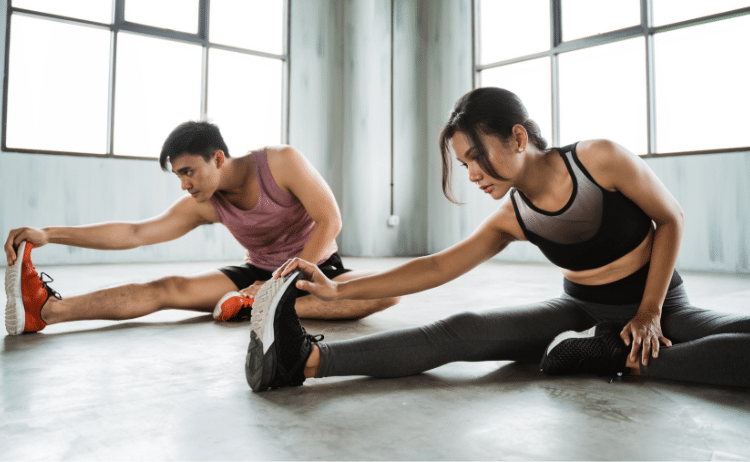
- After the workout, do a short cool-down (stretching legs, hips, arms) for 3-5 minutes.
- Pick 2-3 workouts per week to begin with and rest one day in between.
- Focus on good form rather than speed or number of reps — quality matters more when you’re starting.
- As you get more comfortable, you can increase reps or do more rounds.
Workout 1: Bodyweight Squats & Alternating Lunges
Bodyweight squats and lunges are staples in beginner friendly home workouts, because they engage your legs, glutes, and core without any equipment. Healthline+1
How to do it:
- Stand with feet shoulder-width apart, toes slightly out. Lower into a squat (hips back, chest up), then push through your heels to bring yourself back up. Do 10-15 reps.
- After squats, move into alternating lunges: step your right foot forward, lower until your front thigh is parallel to the floor, then push back up. Repeat on the left leg. Do 8-12 reps per leg.
Tip: Keep your core engaged and your front knee aligned with your front foot to avoid knee strain.
Workout 2: Push-ups or Knee Push-ups + Plank Holds
Upper body and core strength matter even at home. These exercises are also part of many beginner friendly home workouts. Healthline+1
How to do it:
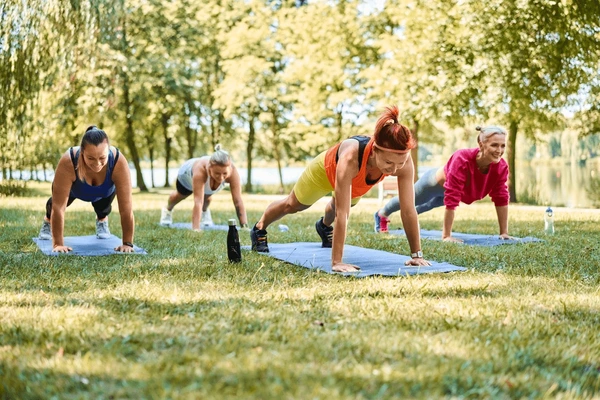
- Start in a plank position with hands under shoulders, body in a straight line. Lower yourself until your chest just above the floor, then push back up. Do as many full push-ups as you can with good form (5-10), or perform knee push-ups if needed.
- Then transition into a plank hold: elbows (or hands) under shoulders, body straight, hold for 20-30 seconds.
Tip: If your back dips, slightly bend the knees to keep the hips aligned.
Workout 3: Glute Bridge + Single-Leg Variation
Targeting the glutes and hamstrings is important, especially in beginner friendly home workouts where we’re using bodyweight only. SELF+1
How to do it:
- Lie on your back with knees bent, feet flat on the floor hip-width apart. Push your hips up until your body forms a straight line from shoulders to knees. Squeeze your glutes at the top, then lower slowly. Do 10-15 reps.
- Once that’s comfortable, try the single-leg glute bridge: keep one foot on the floor, lift the other leg straight, and drive through your heel to lift hips. Do 6-8 reps per leg.
Tip: Pause at the top for a moment to emphasise the glute squeeze.
Workout 4: Bird-Dog + Superman
Core stability and balance are major themes in beginner friendly home workouts. These movements help you strengthen the back, glutes and core in a safe way. Healthline+1
How to do it:
- Bird-Dog: Start on all fours (hands under shoulders, knees under hips). Extend your right arm forward and your left leg back at the same time, keeping your hips square. Hold for a count of 2, then return. Switch sides. Do 8-10 reps each side.
- Superman: Lie face down on the floor, arms stretched out in front. Simultaneously lift your arms, chest and legs off the floor, squeeze your back muscles, then lower down. Do 10-12 reps.
Tip: Move slowly and with control — avoid arching the lower back too much.
Workout 5: Mountain Climbers + High Knees
Cardio and dynamic movement play a part too. Even in beginner friendly home workouts, getting your heart rate up helps fitness progress. Nuffield Health+1
How to do it:
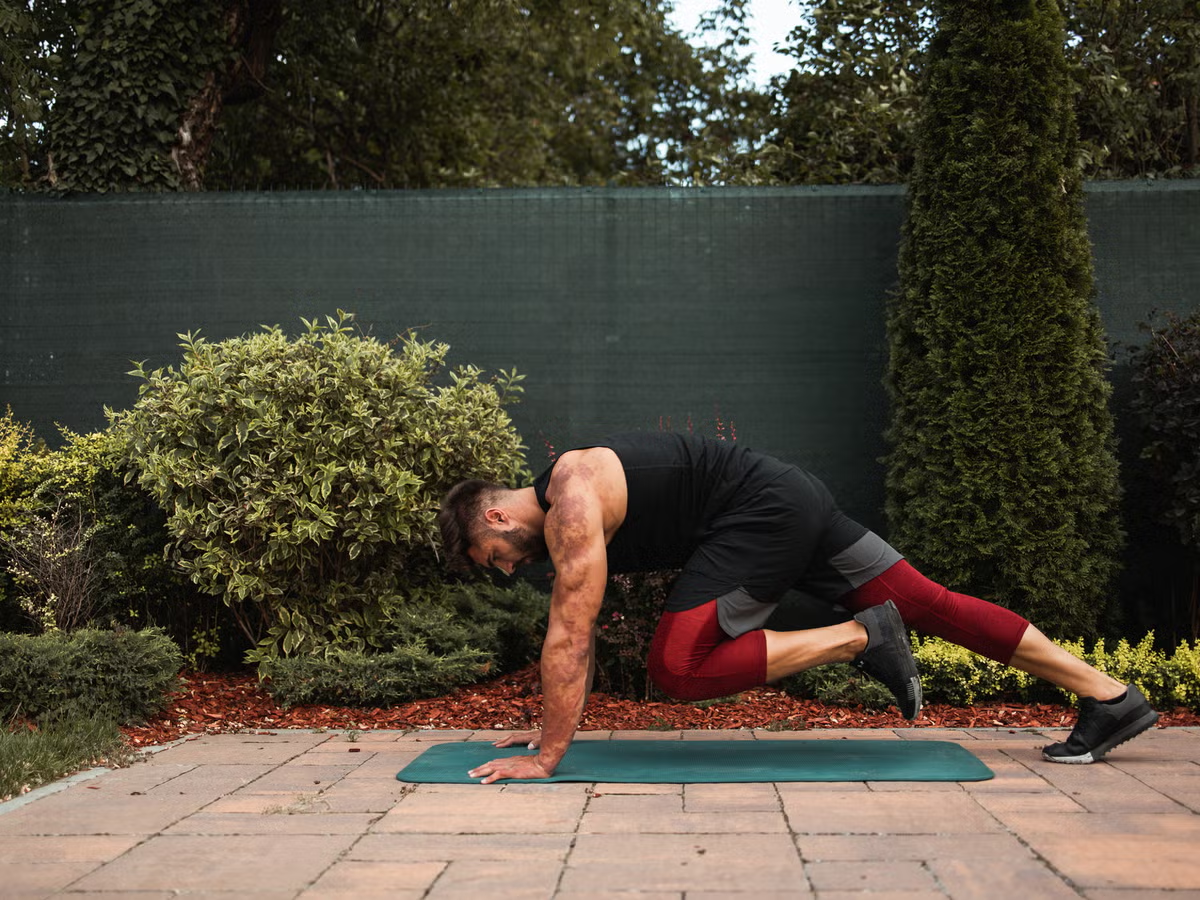
- Mountain Climbers: Get into a plank position. Drive your right knee toward your chest, then switch legs quickly (as though you’re running in place in plank). Do this for 30 seconds.
- High Knees: Stand tall, and quickly raise one knee toward your chest, then alternate rapidly. Continue for 30-45 seconds.
Tip: Land softly on your feet when doing high knees, keep your core engaged.
Workout 6: Chair-Squats + Wall Sit
Strength and endurance for your legs are built through simple holds and controlled movements — these are perfect for beginner friendly home workouts. Healthline+1
How to do it:
- Chair-Squats: Stand in front of a chair, lower yourself until your glutes barely touch the chair then push back up. Do 10-12 reps.
- Wall Sit: Stand with your back against a wall, slide down until your thighs are parallel to the floor, hold for 20-30 seconds (or longer as you improve).
Tip: Keep your knees directly above your ankles. If the wall sit hurts your knees, reduce hold time.
Workout 7: Plank to Downward Dog + Side-Lying Hip Abduction
Wrapping up your beginner friendly home workouts with movements that involve core, shoulders and hips — well-rounded and effective. Healthline+1
How to do it:
- Plank to Downward Dog: Start in a high plank position. From there, push your hips up and back into a Downward Dog shape (body forms a triangle) and hold 2-3 seconds, then return to plank. Repeat for 8-10 reps.
- Side-Lying Hip Abduction: Lie on one side, legs straight. Lift the top leg up toward the ceiling, lower it slowly. Do 10-12 reps per side.
Tip: For the plank to dog move, try not to bend the knees too much — the goal is a controlled stretch of the shoulders and hips.
How to build your week with these workouts
You can structure your week like this:
- Day 1: Workout 1 + Workout 2
- Day 2: Rest or light walk
- Day 3: Workout 3 + Workout 4
- Day 4: Rest
- Day 5: Workout 5 + Workout 6
- Day 6: Workout 7
- Day 7: Rest or a gentle yoga/stretch session
This pattern uses the beginner friendly home workouts in a balanced way, gives you recovery time, and keeps you consistent. As you become stronger and more confident, you can increase rounds or combine workouts into longer sessions.
Common mistakes beginners make
- Skipping the warm-up or cool-down — you’re more prone to injury and soreness.
- Rushing through reps — form matters far more than speed.
- Doing too much too soon — remember these are beginner friendly home workouts; progress gradually.
- Neglecting recovery — rest days matter as much as workout days.
Safety and modifications
Always pay attention to your body. If you have existing injuries or health conditions, consult a fitness professional or medical provider before starting new exercises. Many of these movements can be modified: shorter hold times, fewer reps, or easier variation until you feel ready.
Conclusion
Getting started with fitness doesn’t mean you need a gym membership or fancy equipment. With these beginner friendly home workouts, you can build strength, improve endurance and feel better from day to day — all within your home environment. Pick your favourite workouts, stick to a simple schedule, priorities form and recovery, and you’ll be well on your way to better health and fitness.
Top 10 FAQs About Beginner Friendly Home Workouts
Frequency and Schedule
Q1: How many times a week should I do these beginner friendly home workouts?
A: Aim for 2–4 sessions per week to begin with, allowing rest days in between to let your body recover.
Q2: How long will it take to see results from these beginner friendly home workouts?
A: You may start feeling more energy and better movement within a few weeks; visible strength improvements typically show after 4–6 weeks of consistent effort.
Equipment and Setup
Q3: Do I need a mat or any equipment for these beginner friendly home workouts?
A: No equipment is required — a mat is optional for comfort but you can use a towel or soft surface.
Q4: Can I combine two of these beginner friendly home workouts in one day?
A: Yes — you can pair simpler workouts (like Workout 1 + Workout 2) but listen to your body and avoid over-doing it in the first few weeks.
Nutrition and Recovery
Q5: What should I eat to support these beginner friendly home workouts?
A: Focus on balanced meals with protein (for muscle repair), healthy carbs (for energy) and plenty of vegetables and water. Nutrition supports your workouts.
Q6: What if one of the movements in these beginner friendly home workouts is too hard?
A: Modify it. For example, do knee push-ups instead of full push-ups, or reduce reps. Progress when you’re ready.
Time and Progress Tracking
Q7: Can I still do these beginner friendly home workouts if I’m very busy?
A: Absolutely — many can be done in 20–30 minutes and you just need a small clear space. Consistency matters more than long sessions.
Q8: Should I track my progress when doing beginner friendly home workouts?
A: Yes — note your reps, rounds, how you feel, maybe take a “before” photo. It’s motivating to see progress and stay accountable.
Soreness and Next Steps
Q9: What if I feel sore after these beginner friendly home workouts?
A: Mild muscle soreness is normal for new workouts. If pain is sharp or persists, stop and rest. Light stretching, hydration and sleep help recovery.
Q10: After completing these beginner friendly home workouts for a few weeks, what next?
A: You can increase the number of rounds, reduce rest between exercises, or add variations (e.g., jump squats, push-up variations) to challenge your body further.
Want more meal plans and recipes? Explore our Protein foods, Micronutrients, Balanced nutrition and Meal plan. Or Visit My YouTube Channel The Nutrition Guides.