Family-Friendly Meal Plan: Healthy Options for Everyone
Family-Friendly Meal Plan
Healthy Options for Everyone:
When you’re looking to feed a household of different ages, appetites and preferences, having a solid Family-Friendly Meal Plan can make the difference between stress and success. In this article we’ll walk you through why a Family-Friendly Meal Plan matters, how to create one, sample weekly menus, smart shopping and prep tips, and how to keep everyone happy (including kids, picky eaters and busy parents). Let’s dig in!
Why a Family-Friendly Meal Plan matters
A well-designed Family-Friendly Meal Plan helps you:
- Save time and mental energy deciding what to cook each day.
- Keep meals nutritious and balanced for all ages.
- Avoid last-minute take-out or unhealthy convenience choices.
- Get everyone around the table, eating together and sharing a routine.
When you adopt a Family-Friendly Meal Plan, you set expectations and bring consistency, which means less stress and more enjoyment.
Core principles of a Family-Friendly Meal Plan
To build a successful Family-Friendly Meal Plan, focus on these key principles:

1. Balance meals for nutrition and appeal
Include lean proteins, plenty of vegetables, whole grains and healthy fats. According to nutrition guidance, a healthy diet emphasises vegetables, whole grains and limiting added sugar and salt. Wikipedia+2nhs.uk+2
2. Keep it flexible and realistic
Busy families need flexibility. A rigid schedule can lead to burnout. One author suggests that meal planning “does not have to be difficult” if the system is simple and realistic. habitsandhome.com
3. Build a master list of meals your family enjoys
Create a list of go-to recipes that everyone tolerates or likes. This becomes your menu bank when designing your Family-Friendly Meal Plan. habitsandhome.com
4. Include simple, kid-friendly meals
Make sure your plan includes meals that appeal to kids but still meet healthy standards. Sources list items like turkey tacos, salmon with brown rice, quesadillas and veggie-loaded mac & cheese. Workweek Lunch+1
5. Use smart shopping & prep
Plan grocery lists, buy seasonal produce, batch-cook or prep ahead. Budget-friendly tips include focusing on staples you can reuse throughout the week. EatingWell+1
How to structure your Family-Friendly Meal Plan
Here’s a step-by-step approach to creating your Family-Friendly Meal Plan each week:
Step A: Review the week ahead
Look at your family’s schedule: work, school, activities, evenings out. Identify the busiest nights.
Step B: Choose 3-4 “anchor dinners”
Pick main meals (for example: chicken & veggie stir-fry, fish tacos, vegetarian pasta, sheet-pan roast) that will be the backbone.
Step C: Fill in lunches, breakfasts and snacks
For breakfast, aim for something simple but nutritious (like whole-grain toast + eggs + fruit). Lunches can repurpose leftovers or use easy options. Snacks should include fruit/veggies, nuts, yogurt.
Step D: Make a shopping list
Based on your meals, write a shopping list sorted by category (produce, proteins, grains, dairy, pantry). This saves time and avoids impulse buys.
Step E: Prep ahead
On a slower day (weekend or free evening), wash and chop produce, cook a batch of grains, marinate proteins, portion snack packs. This prep boosts success of the Family-Friendly Meal Plan.
Sample 7-Day Family-Friendly Meal Plan
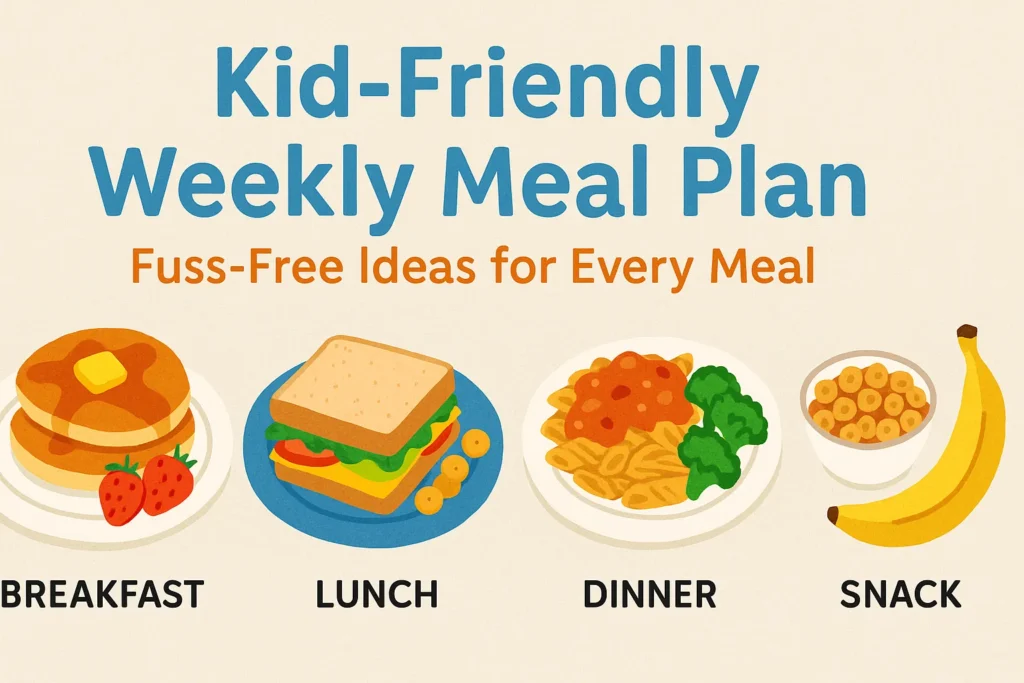
Here’s an example of how your Family-Friendly Meal Plan might look for a week—feel free to swap items and adjust to your family’s tastes.
| Day | Breakfast | Lunch | Dinner | Snack |
|---|---|---|---|---|
| Monday | Overnight oats + fresh fruit | Whole-grain wrap with grilled chicken & salad | Baked salmon + brown rice + steamed broccoli | Yogurt + berries |
| Tuesday | Scrambled eggs + toast + sliced tomatoes | Leftover salmon bowl | Turkey tacos with whole-grain tortillas + veggies | Apple slices + nut butter |
| Wednesday | Smoothie (spinach, banana, milk) + whole-grain cereal | Veggie & hummus sandwich | Sheet-pan chicken & mixed vegetables | Carrot sticks + hummus |
| Thursday | Yogurt parfait (yogurt, granola, fruit) | Chicken salad with mixed greens | Vegetarian pasta (whole wheat) + side salad | Mixed nuts + orange segments |
| Friday | Whole-grain pancakes + berries | Leftover pasta lunch box | Homemade pizza (whole-wheat crust, veggies, lean cheese) | Popcorn + grapes |
| Saturday | Pancakes or eggs + fruit | Picnic style lunch (wraps, veggies) | Stir-fry with tofu or chicken + colourful veggies + quinoa | Cottage cheese + pineapple |
| Sunday | French toast (whole-grain) + fresh fruit | Family-style salad with mixed veggies & protein | Slow-cooker beef or veggie stew + whole-grain bread | Frozen yogurt pops |
With a Family-Friendly Meal Plan, you have both structure and variety—giving kids favourite flavours plus healthy options everyone can share.
Tips for picky eaters & making it enjoyable
- Let each family member pick a meal once per week so they feel invested in the Family-Friendly Meal Plan.
- Offer build-your-own meals (taco night, salad bar, wraps) so individuals customise their plates.
- Sneak in vegetables into sauces, pasta dishes, casseroles so the nutrition is there without fuss.
- Make meals colourful and fun—kids tend to try foods that look appealing.
- Eat together when you can. A shared meal reinforces the value of your Family-Friendly Meal Plan.
Budget-friendly strategies
- Buy seasonal produce — it’s cheaper and fresher. EatingWell+1
- Use pantry staples (canned beans, frozen veggies, whole grains) to build your meals. EatingWell+1
- Plan one meal that uses leftovers or repurposes mid-week so you save time and money.
- Batch-cook and freeze portions for busy nights—these work seamlessly into your Family-Friendly Meal Plan.
How to keep variety without overload
Your Family-Friendly Meal Plan should balance repetition (which eases planning) with novelty (which keeps everyone interested). Here’s how:
- Rotate 4-5 favourite dinners each month, then add one new recipe.
- Change up side-dishes and sauces for familiar mains to keep them fresh.
- Use global flavours (Mexican, Mediterranean, Asian) so meals feel different but still manageable.
- Switch one day a week to a meat-free meal—it’s healthy and reduces cost.
Tracking success and adjusting
After a few weeks of following your Family-Friendly Meal Plan, check in:
- Are meals being eaten or do many leftovers get wasted?
- Are kids happy and engaged with meals?
- Is the schedule realistic or are you always scrambling?
Based on what you observe, adjust: change meal times, simplify meals further, switch more favourite meals into the plan.
Common pitfalls and how to avoid them
- Planning too many complex meals: Stick to recipes with manageable prep time.
- Ignoring preferences: Build your plan around what your family actually likes.
- Shopping without a list: A shopping list aligned to your Family-Friendly Meal Plan keeps you focused.
- Not prepping ahead: A little Sunday or free-time prep goes a long way.
- Skipping shared meal time: Try to eat together some nights. It strengthens family bonds and reinforces your plan.
The long-term benefits
By sticking to your Family-Friendly Meal Plan, you’ll enjoy:
- Better overall nutrition for your family.
- Less stress around “what’s for dinner?” each day.
- More family time around the table.
- Improved budget control and less food waste.
- A stronger food culture in your home (kids learn healthy habits).
Conclusion
A well-thought-out Family-Friendly Meal Plan is more than a schedule of dinners—it’s a tool to bring health, ease and connection into your home. With balanced meals, realistic prep, involvement from all family members and smart shopping, you’ll find yourself feeding everyone well and enjoying the process. Start small, stay consistent, and watch how your weekly meals transform into a rhythm that works for your entire household.
Top 10 Best-search FAQs
Q1: What exactly is a “family-friendly meal plan”?
It’s a pre-planned schedule of meals designed to meet the nutritional needs and tastes of all family members, making dinner time easier and more balanced.
Q2: How many nights per week should I plan the same meal for everyone?
Aim for 4-5 anchored meals per week, with flexibility for leftovers or simpler meals on busier nights.
Q3: How do I include picky eaters in the plan?
Allow build-your-own meals, offer one familiar meal each week, and gradually introduce new foods alongside favourites.
Q4: Can a family-friendly meal plan be budget-friendly?
Yes — by using seasonal produce, pantry staples, batch-cooking and smart shopping lists, you can make it cost-effective. EatingWell+1
Q5: How do I create a shopping list that matches the meal plan?
Start from your planned meals, list all ingredients by categories (produce, pantry, proteins, dairy), then remove items you already have.
Q6: How much prep should I do ahead of time?
Even 30-60 minutes of prep (washing/chopping veggies, cooking grains, marinating) can make a big difference.
Q7: What if my family has different dietary needs (vegetarian, gluten-free)?
Adapt the meals by swapping proteins or grains, and ensure the Family-Friendly Meal Plan includes options everyone can eat.
Q8: Can weekends be different in the meal plan?
Absolutely. Use weekends for more flexible or fun meals, and plan the weekday core for efficiency.
Q9: How do I avoid meal fatigue (same dishes every week)?
Rotate meals, tweak sides or sauces, and try one new recipe each month so your Family-Friendly Meal Plan stays fresh.
Q10: How long before I see benefits from using a meal plan?
Often within a few weeks you’ll notice fewer last-minute take-outs, less waste, better family mealtime and more predictable grocery spending.
Want more meal plans and recipes? Explore our Protein foods, Micronutrients, Balanced nutrition and Meal plan. Or Visit My YouTube Channel The Nutrition Guides.